Creative development and complexity
Original design, dimensional development, rendering, pattern work, versioning and coordination with other creative partners all contribute to the design scope.
 Start a Project ↗
PLANNING GUIDE / COST DRIVERS
PRICE FOLLOWS SCOPE
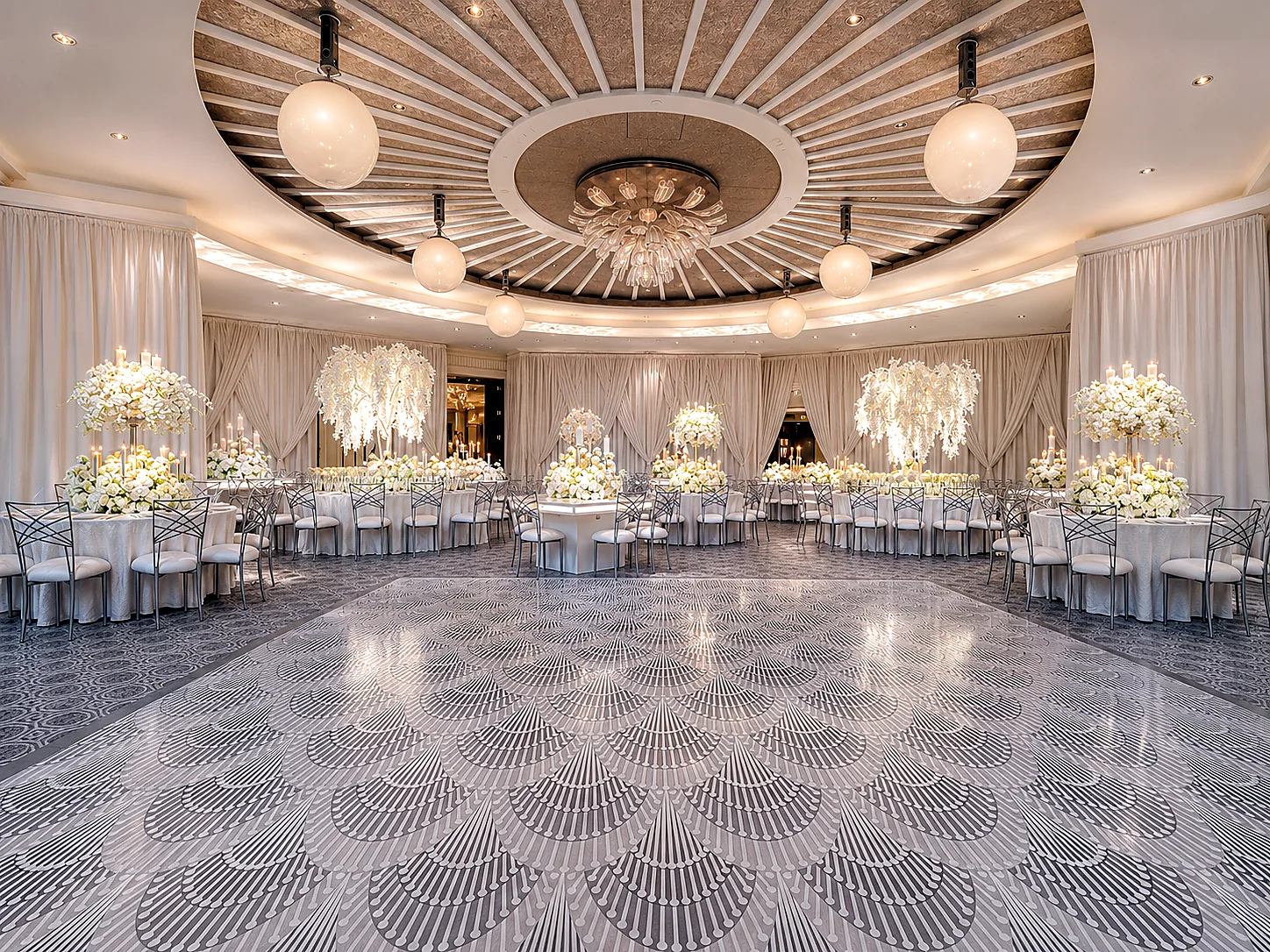
A stage facade, floor wrap, branded entrance, seating display or complete environment may look simple in a photograph while requiring very different design, material, finishing, packing and installation decisions.
The useful question is not only “What does decor cost?” It is “Which parts of this specific scope require design, fabrication, printing, transport, venue coordination, installation and removal?”
PRIMARY COST DRIVERS
Original design, dimensional development, rendering, pattern work, versioning and coordination with other creative partners all contribute to the design scope.
Overall dimensions, the number of pieces and whether components repeat or vary affect material use, production time, packing and installation.
Substrate, surface, color, texture, illumination, edge treatment and camera-facing finish determine how a piece must be produced and completed.
Freestanding elements, guest interaction, lighting, AV, power, moving parts and venue conditions can add structural, technical and coordination requirements.
Approved vector artwork and accurate production files reduce correction work. Missing, low-resolution or changing files can expand design and prepress scope.
Distance, docks, elevators, stairs, room access, labor rules, narrow windows, onsite finishing and removal requirements shape logistics and crew planning.
If a piece may travel or be used again, share that requirement at the start. Durability, breakdown size, connectors, packing and replacement parts may need to be designed into the build.
Changes before design approval are different from changes after files, materials or fabrication are committed. A clear decision path protects both the schedule and the budget.
A compressed review cycle or short installation window can change crew, transport and production planning. The event date alone does not describe the full schedule.
USE THE BUDGET WELL
Budget context works best when it is paired with a ranked list of what the event must accomplish. That lets the team focus attention where it will be most visible and useful.
BEFORE REQUESTING AN ESTIMATE
QUESTIONS BEFORE THE ESTIMATE
A single number would ignore the scale, quantity, design development, materials, finish, files, venue conditions, installation window and strike requirements that define the actual work.
Budget context can help the team evaluate appropriate materials, priorities and scope options. Any direction still requires review against the venue, schedule and production requirements.
Yes. Access routes, elevators, docks, approved surfaces, house rules, installation windows, labor requirements and strike deadlines can change how the work must be built, transported and installed.
No. It explains common cost drivers. An estimate or proposal is based on the reviewed project scope and does not become final through this guide.
PROJECT PLANNING